
International Fact-Finding Mission report on crimes against humanity committed by RSF militia
By: Editor–in-Chief
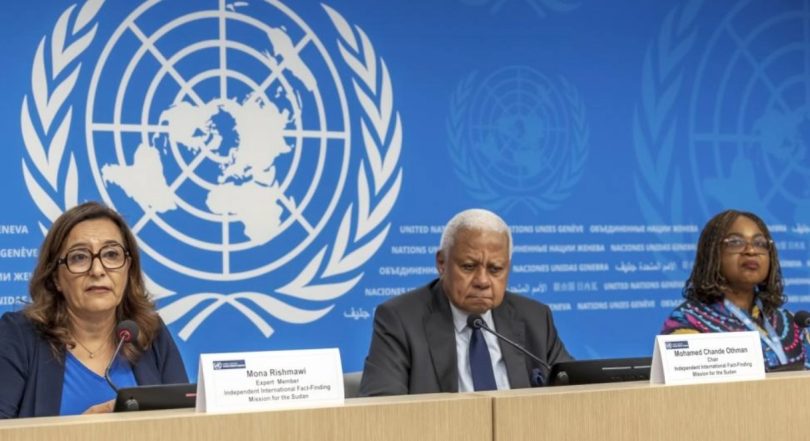
The United Nations Fact-Finding Mission in Sudan published its preliminary 18-page report on Friday, summarizing its findings since its formation in October 2023. It also published a press release summarizing the report.
A quick look at the statement, which not only summarizes the report but also cites comments from commission members, reveals that it mentions the Rapid Support Forces militia six times in relation to crimes, atrocities, attacks, killings, detentions, rapes, and all human rights violations, violations of international humanitarian law, war crimes, and crimes against humanity in El Fasher, and previously in several other areas, and it was the only one to do so.
The report devoted seven separate paragraphs to crimes and atrocities it said were committed by the Rapid Support Forces and their allied militias, and devoted one paragraph to war crimes in the Al-Kanabi area of Gezira after its recapture from the militias. Regarding rape cases, the statement distinguished between “individual” acts by members of the army and “collective” acts committed by the Rapid Support Forces.
A quick look at the statement reveals that it mentions the Sudanese Armed Forces six times, none of which relate to crimes against humanity, rape, or kidnapping. All of the crimes are common to both sides and relate to what it says are war crimes, including the bombing of areas where civilians are being held, the detention of militia collaborators, and the denial of access to legal, family, and bureaucratic communications.
The introduction to the report contains a four-paragraph summary that can be summarized as follows:
1. It documents attacks on civilians and essential targets necessary for their survival in Sudan—references to hospitals, relief convoys, housing, water, electricity, etc.
2. It concludes that both parties to the conflict have violated international human rights law and international humanitarian law, and that most of these violations amount to war crimes—arrests, aerial bombardment, etc.
3. The conduct of the Rapid Support Forces may also constitute crimes against humanity, including persecution, genocide, and systematic killing based on ethnicity, tribe, and gender, rape for the purpose of persecution and as a means of humiliation during combat, etc.
4. The report calls for accountability and lays out a roadmap for justice.
The UN Fact-Finding Mission reported widespread international crimes, and the Commission issued a press release summarizing the key points of the detailed report.
The statement affirmed that the warring forces in Sudan are deliberately targeting the civilian population in the stricken country and committing atrocities, including war crimes, on a large scale, according to the latest report of the Independent International Fact-Finding Mission on Sudan.
The statement said, “Some of the acts may also amount to crimes against humanity, including persecution and extermination.”
This paragraph describes what the Rapid Support Forces committed.
The report, presented to the UN Human Rights Council, titled “A War of Atrocities,” concluded that both the Sudanese Armed Forces and the Rapid Support Forces were responsible not only for direct and widespread attacks against civilians, but also for the widespread destruction of infrastructure essential for survival, including medical centers, markets, food and water networks, and displacement camps.
“The report also concluded that, during the siege of El Fasher and surrounding areas, the Rapid Support Forces committed countless crimes against humanity, including murder, torture, enslavement, rape, sexual slavery, sexual violence, forced displacement, and persecution on ethnic, gender, and political grounds.
The Rapid Support Forces and their allies used starvation as a method of warfare, depriving civilians of essential supplies for their survival, including food, medicine, and relief supplies—which may amount to the crime of genocide.”
“Our findings leave no room for doubt: civilians are paying the highest price in this war,” said Mohamed Chande Osman, head of the fact-finding mission. Both sides deliberately targeted civilians through attacks, summary executions, arbitrary detention, torture, and inhumane treatment in detention facilities, including denial of food, sanitation, and medical care. These are not accidental tragedies, but deliberate strategies that amount to war crimes.
The Rapid Support Forces (RSF) have also committed crimes against humanity, including widespread killings, sexual and gender-based violence, looting, and the destruction of livelihoods—sometimes amounting to persecution and extermination.
Civilians are targeted based on their perceived affiliation with the opposing side.
In El Fasher and surrounding areas, the RSF and its allies have carried out widespread killings of hundreds of civilians, launched deliberate attacks against non-Arab communities, including the Zaghawa, Fur, Masalit, and Tunjur, and forcibly displaced residents.
In Zamzam camp in April, between 300 and 1,500 civilians were killed—mostly women and children.
In Gezira, the Sudanese Armed Forces and their allies targeted the Al-Kanabi area after recapturing the town in January, killing dozens and forcing most of the population to flee.
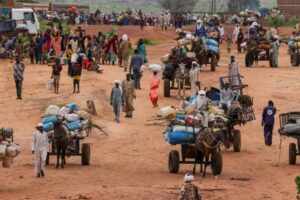
The statement blamed both parties for failing to take adequate measures to mitigate the impact of airstrikes and artillery attacks on civilians and civilian infrastructure. As a result, towns, villages, displacement camps, markets, hospitals, and homes have been systematically destroyed or rendered uninhabitable, displacing 12.1 million people and leaving more than half the country’s population facing severe food insecurity.
Only one in four health facilities remains operational in the worst-affected areas.
Humanitarian aid has been obstructed, convoys have been attacked, and aid workers have been targeted. Between April 2023 and April 2025, more than 84 Sudanese humanitarian workers were killed, while others were arbitrarily detained.
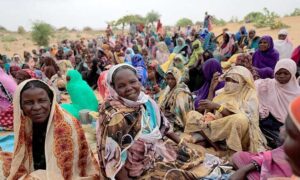
The report concluded that both sides arbitrarily arrested, detained, and tortured civilians based on the victims’ ethnicity, political views, occupation, or alleged collaboration with the opposing side.
Detainees were often held without adequate food, sanitation, or medical care. Survivors described RSF detention centers as “slaughterhouses,” where detainees were sometimes beaten to death and summarily executed. Some were subjected to forced labor or held for ransom, with their families forced to pay for their release.
RSF fighters committed sexual and gender-based violence, including rape, gang rape, forced marriage, and sexual slavery. Women and girls from non-Arab communities, some as young as 12, were particularly targeted.
“Behind every documented story is a family torn apart, a displaced community, and a survivor of unimaginable violence,” said Joy Ngozi Ezeilo, an expert member of the fact-finding mission.
“We interviewed numerous civilians who have suffered profound psychological trauma and experienced or witnessed killings, starvation, sexual violence, torture, and the destruction of essential services. A cycle of impunity has emboldened perpetrators for decades. Victims—especially women and children, who bear the brunt—deserve justice and reparations.”
The report outlined the steps needed for accountability, emphasizing that justice and protection cannot wait until a peace agreement is reached.
The statement accused Sudan’s domestic institutions of being unwilling and unable to conduct truly credible investigations.
Instead, they perpetuate selective justice, protect perpetrators through immunities and amnesties, and continue to deny survivors any real hope of redress.
“Our report not only exposes atrocities, but also lays out a roadmap for justice,” said expert member Mona Rishmawi. The international community must act immediately to enforce the arms embargo, support justice by supporting the International Criminal Court, establishing an independent judicial mechanism for Sudan, using universal jurisdiction to hold perpetrators accountable, and ensuring that perpetrators of atrocities face consequences, including targeted sanctions.
“Every day of inaction puts the Sudanese people under attack—their lives, communities, and survival at risk,” Rishmawi said. “Accountability is not an option—it is a legal and moral imperative to protect civilians and prevent further atrocities.”
The fact-finding mission called on the international community to impose targeted sanctions on individuals and entities responsible for international crimes. It also urged swift and coordinated action to cease hostilities, protect civilians, lift the blockade, and halt ethnic targeting and sexual and gender-based violence.
It urged all states, particularly those with influence over the parties, to abide by the arms embargo, refrain from providing material support to them, and increase humanitarian assistance.
It should be noted that the UN Human Rights Council established the Independent International Fact-Finding Mission on the Sudan in October 2023 by resolution A/HRC/RES/54/2, and its mandate was extended until October 2025 by resolution A/HRC/RES/57/2. Its primary mandate is to “investigate, establish the facts, circumstances, and root causes of all alleged violations and abuses of human rights and violations of international humanitarian law, including those committed against refugees, and related crimes, in the context of the ongoing armed conflict that began on 15 April 2023, between the Sudanese Armed Forces and the Rapid Support Forces militia, as well as other warring parties.”
The members of the Fact-Finding Mission were appointed by the President of the UN Human Rights Council; they are not UN staff members and do not receive a salary for their work.
While the UN Human Rights Office provides support to the fact-finding mission, the members serve in their personal capacity and are independent of any government or organization, including the UN.
Although the UN has emphasized that “any opinions or views expressed here are solely those of the mandated members,” it is understood that the experts’ opinions form the basis for any future action.