
Blood and Gold in Sudan: A War Sustained by Mercenaries
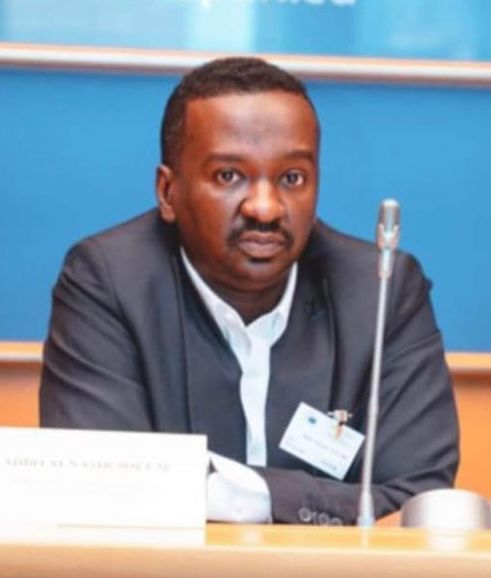
Dr. Abdelnasser Solum Hamed
Introduction
In El Fasher, mornings no longer begin with the call to prayer. Instead, the city wakes to the constant buzz of drones in the sky. The sound is now so familiar that children copy it in their play. On the ground, daily life is reduced to waiting: long bread lines snake across empty streets, often stretching further than the lines outside the few schools that are still open.
In Zamzam camp, a woman whispered that her prayers had changed: “I no longer ask for peace,” she said, “I ask for food.” Around her, families survive on little more than scraps, while fathers spend their days digging graves for children lost not to bullets, but to hunger and disease. Aid convoys, when they manage to arrive, are often looted or stopped at checkpoints before reaching those in need.
For women and children, the daily struggle is not only about finding food but also about safety. Families often sleep in shifts, listening for gunfire or the approach of armed men. Survival has become the only routine of life in Darfur.
Mercenaries and Gold
Darfur today looks less like a battlefield and more like a marketplace for hired fighters. Men arrive in groups from Chad, Niger, Mali, and Libya, carrying the marks of other wars. On the edge of Kutum, a young man told me with anger, “They fight here as if they own this land. But when they die, they are buried in our soil, not theirs.”
Not all of these fighters come from Africa. The RSF has begun turning to private security companies, bringing in men from as far as Latin America, especially Colombia. Paid around $1,000 to $2,000 a month, they bring experience from counterinsurgency and urban combat. For the RSF, it is a business deal—money in exchange for violence. For civilians, it means more fear: attacks carried out by strangers with no connection to Sudan’s survival.
International law is clear. The 1989 UN Convention bans the hiring, funding, and use of mercenaries. Sudan has signed it. Every foreign fighter here is not only a gun for hire but also a breach of law. Yet for people stuck in camps in North Darfur, such legal language feels meaningless. A displaced teacher told me: “We are killed twice—once by bullets, and once by hunger.”
If mercenaries provide the muscle, gold provides the money. Sudan is Africa’s third-largest gold producer, mining nearly 100 tons each year. But up to 80 percent of it disappears through smuggling networks, costing the state around $3 to $4 billion a year—nearly half its national budget.
When South Sudan split in 2011, Sudan lost most of its oil income, and gold became its main resource. But instead of saving the economy, it was taken over by the RSF. Mines in Darfur and the Nuba Mountains became their private banks. The gold was not invested in schools or hospitals. It was turned into weapons, drones, and salaries for mercenaries.
The cycle feeds itself. Gold pays the fighters, and the fighters guard the gold. Locals, with bitter irony, call it “the economy of blood and gold.”
Regional and Legal Dimensions
Darfur is more than a local battlefield—it has become a regional hub where borders mean little. Smuggling routes that once moved livestock or fuel now carry fighters and gold across the deserts into Chad, Libya, and the Central African Republic. In the border town of Tina, traders describe trucks crossing at night, their loads covered with sacks of millet, while fighters sit in the back and gold dust is hidden in small containers.
The gold does not vanish—it is cleaned and sold as if legitimate. From Darfur’s mines it goes north into Libya, then east to Dubai’s markets, where its violent origins are erased. By the time it reaches international buyers, it is no longer seen as bloodstained Sudanese gold, but just another commodity at world prices.
The effects go far beyond Sudan. For Egypt, its neighbor’s collapse is not a distant issue. The 1,200-kilometer border is already a route for trafficking and migration. More serious is the risk to the Red Sea corridor—the narrow passage from Bab el-Mandeb to the Suez Canal that carries nearly 12 percent of global trade. A Cairo-based analyst put it simply: “If Sudan collapses, the Red Sea will not stay stable for long—and global trade will feel it.”
At the same time, the RSF has grown beyond being just a militia. By controlling gold revenues and paying mercenaries, it now acts like a parallel state. It has its own treasury, secures supply lines across borders, and maintains an army of foreign fighters. This financial power ensures that even if the battles pause, the war economy will continue, waiting for the next spark.
International law brings little relief. Hiring foreign mercenaries breaks the UN Mercenary Convention. Blocking aid and starving civilians violates the Geneva Conventions, especially Articles 48 and 51. Each stolen truck is not just theft—it may be a war crime. And every starving child in Zamzam camp is not only a victim of neglect but also proof that laws without enforcement are just paper. Human Rights Watch and Amnesty International have repeatedly documented these acts as deliberate strategies of war.
Conclusion
The silence of the international community makes this cycle even harder to break. Each day without action deepens the suffering, leaving civilians to face hunger, displacement, and violence alone. Without decisive measures, Sudan’s war economy will remain a wound that spreads beyond its borders.
In Zamzam camp, a mother holding her malnourished child told me, ‘We no longer count the days by the sun, but by how many times the children cry from hunger.’ Such voices reveal the human cost behind every statistic.
In Sudan today, war itself has replaced the economy. Families survive not through markets or harvests but through aid—when it arrives at all. Breaking this cycle is no longer a political debate; it is a matter of human survival. The silence of the world can no longer be an excuse. Without urgent action, Sudan’s tragedy will not remain Sudan’s alone—it will destabilize the region and stain the conscience of the international community.
—
Dr. Abdelnasser Solum Hamed
Senior Researcher in Crisis Management & Counter-Terrorism
Director, East Africa & Sudan Program – FOXS Research, Sweden