
The governor of West Darfur, Bahr Eddin Adam Karama: The security situation in West Darfur State is at a critical and highly sensitive stage , Interviewe
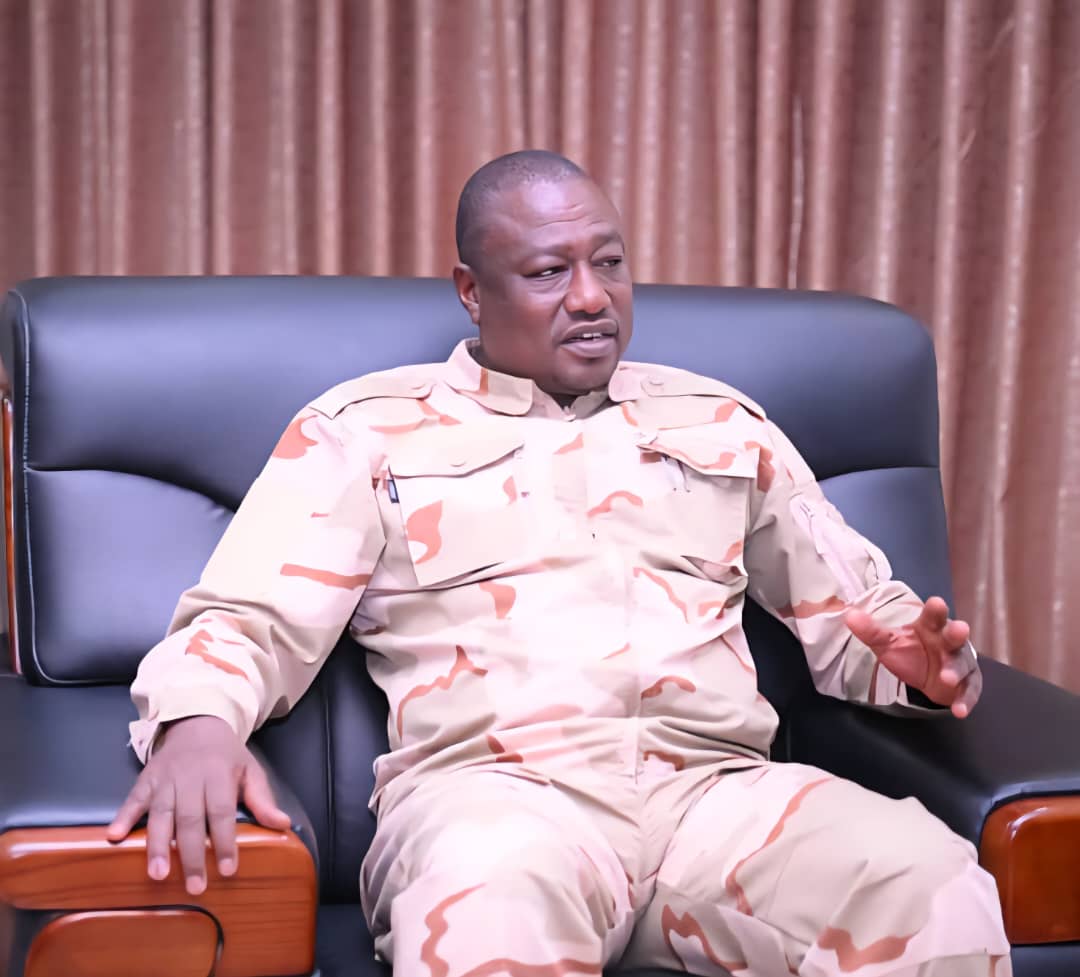
_The Civil Administration has been and continues to be the backbone of the state’s social fabric
The government of West Darfur State has been calling on all social components to ensure the pillars of national unity and awareness of the battle of dignity at this important and critical stage, which requires everyone to know the real enemy of the Sudanese state, which has practiced all forms of violence and abandoned the citizens of Sudan and West Darfur in particular and buried them alive, stressing that the plan of the nation-state is close to the liberation of West Darfur state with all firmness.
The West Darfur state government has also been calling for the need for cohesion and building a youth base based on national unity, and the state’s adoption of youth issues and the pillars of national unity at the highest levels, through the state government’s programs and plans to rebuild what was destroyed by the war, achieve justice, advocate for the establishment of societal values, and face the challenges of the post-war crisis…… Haffiya Elyas interviewed Bahr Eddin Adam Karama, the governor of West Darfur, about the security and humanitarian situation, the conditions of the displaced and the role of civil administrations in the development of the social fabric.
**/ Mr. Governor, first of all, what is your assessment of the current situation in the state? In other words, how do you read the situation in terms of security?
The security situation in West Darfur State is going through a very critical and sensitive phase, as large parts of the state remain under the control of militias, which pose a direct threat to the lives of civilians and the stability of society. We are working according to a gradual security plan, starting with securing strategic areas and protecting supply routes, and ending with the liberation of the entire territory and the restoration of normal life.
**/ What about the refugees of the state? Are they inspected and followed up on regarding their conditions in their areas of displacement?
We have an integrated and up-to-date database that has been prepared in cooperation with civil administrations and field committees, which accurately identifies the numbers and whereabouts of refugees and IDPs in the state, both inside Sudan and in camps in eastern Chad. Our field teams are present on a daily basis to inspect their conditions, monitor their needs, and coordinate the arrival of aid in cooperation with humanitarian organizations. These citizens are a trust on our shoulders, and our responsibility towards them is constant and unchanging; we will not abandon them under any circumstances.
**/ Have you received any response from the United Nations and organizations to intervene and provide relief to the refugees in eastern Chad?
So far, the international response that has arrived has never amounted to the humanitarian catastrophe we are experiencing. Yes, we have received promises from the United Nations and some organizations, but implementation on the ground is very limited. We call for urgent, coordinated, and effective intervention, commensurate with the scale of the tragedy that threatens the lives of hundreds of thousands. We have accurate statistics and figures available to anyone wishing to intervene, and we confirm that any delay in action will double the size of the disaster and make it more difficult to contain.
**/ How do you assess the response of organizations and supporters to the state’s appeals regarding the situation of the displaced?
So far, the response has fallen short of the scale of the tragedy, despite some limited initiatives by national and international organizations. We appreciate any effort made, but we stress that the scale of the disaster requires greater and more coordinated intervention. We continue to make appeals to the international community and humanitarian organizations to fulfill their responsibilities towards the deteriorating humanitarian situation.
**/ The situation of refugees in eastern Chad is a complex catastrophe that combines violence, the collapse of services, and diseases, and is exacerbated by the lack of global funding. Without urgent and coordinated intervention, this crisis will enter an irreversible phase, especially with the repercussions of the rainy season and the expansion of famine in Darfur.
What is happening in eastern Chad is not just an ordinary refugee crisis, but a complex humanitarian catastrophe, where refugees are living in harsh conditions that combine the effects of violence and forced displacement, the near-total collapse of health and education services, the spread of disease, and food scarcity. As the rainy season enters and drought and famine in Darfur increase, the risks are multiplied. If the international community does not act immediately, we are facing a catastrophic scenario that threatens the stability of the entire region.
**/ Beware of the spread of famine in Darfur and Kordofan, which will push more refugees towards Chad, with the aid deficit. The UNHCR has received only 20% of the $409 million it requested to support refugees in 2025.
The humanitarian situation in Darfur and Kordofan is on the brink of a precipice; if famine spreads, it will push new waves of displacement into Chad, increasing the pressure on already scarce resources. The numbers are deeply alarming: the UNHCR receiving only 20 percent of the funding required means a deadly funding gap that threatens the lives of hundreds of thousands of innocent people. We make an urgent appeal to the international community and regional and international organizations to close this gap immediately, because delay means more lives threatened.
**/ What are the latest developments in the local and international legal procedures regarding what the Rapid Support has done to the people of the state?
The file of violations committed by the Rapid Support Militia against the citizens of the state, including crimes against humanity, mass massacres, and war crimes, is our top priority. At the local level, criminal complaints documented by evidence and testimonies have been filed. At the international level, we are in direct contact with human rights organizations and competent courts to ensure that all perpetrators of these crimes are brought to justice. There is no compromise and no tolerance for any criminal, and justice is inevitably coming.
**/ What is the role of the local community and civil administrations in following up on the situation of IDPs outside the state?
Community administrations and the local community have been key pillars in monitoring the situation, coordinating efforts, and reporting to the state government. They have been formally instructed to carry out inventory and follow-up operations and to make suggestions on priorities and needs. They have also played a prominent role in supporting coexistence and easing tensions within host communities, a role that we cherish and rely on very much.
**/ What is the role of the Civil Administration in the next stage?
The Role of the Civil Administration in the Next Stage
The Civil Administration has been and continues to be the backbone of the state’s social fabric and is a key partner in maintaining security and promoting social cohesion. Our plan after the liberation of the mandate focuses on integrating it into the crisis management system, expanding its role in reconciliation and resolving conflicts through traditional methods, and supporting the government’s efforts to restore stability. It will also play a pivotal role in creating an environment for the voluntary return of displaced people and refugees, and ensuring that they are received in their communities in a dignified and secure manner.