
The Credibility of the African Union Is on the Line..!
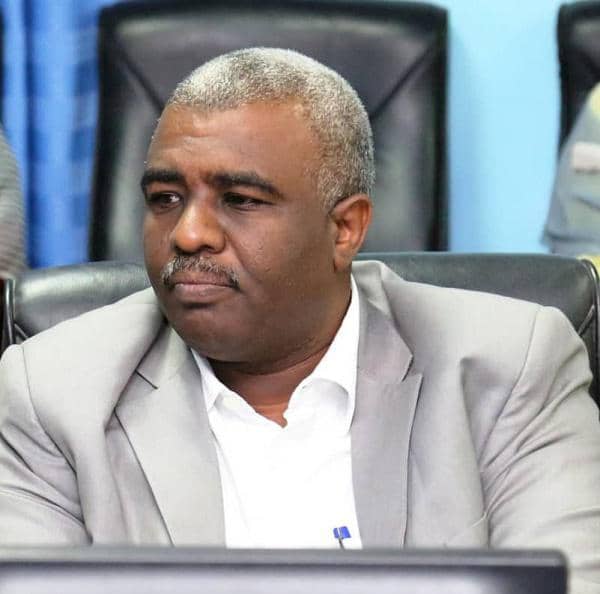
By: Dr. Ibrahim Shiglawi
If the African Union (AU) is truly committed to its stated support for Sudan’s unity and stability, then lifting the suspension of Sudan’s membership stands as the real test of that commitment—and of the AU’s credibility, which is now in question.
Sudan has entered a new transitional phase with the formation of a civilian government that enjoys growing acceptance both domestically and internationally. This shift reflects a qualitative transformation in the course of the crisis, signaling a revival of the national project and a restoration of state institutions through a civilian path, backed by popular support and international endorsement. With the conditions attached to the AU’s October 2021 decision now fulfilled, the continued suspension of Sudan’s membership contradicts the spirit of African partnership and the principle of supporting political transitions on the continent.
Yet widespread frustration and a sense of betrayal persist among many Sudanese over the AU’s handling of the war’s outset, when it avoided labeling the events as an attempted coup by an armed militia to seize power by force. Instead, the Union issued vague statements echoing the narratives of political forces aligned with the militia—narratives that were clearly supported by regional actors at the time.
This early mischaracterization fed political confusion and gave undue legitimacy to actors at the expense of the state, its people, and their sovereign decision-making. The cost of this misstep has been high, with consequences that still echo across Sudan today.
Now, with recent developments—particularly the appointment of a civilian government led by Dr. Kamal Idris, comprised of independent national experts—the call to lift Sudan’s suspension is no longer a plea; it is a rightful demand. The new government represents a genuine step toward political transition, having gained support from the Sudanese people and various regional and international players. It has committed fully to inclusive national dialogue, respect for sovereignty, and the rebuilding of state institutions—making the continuation of Sudan’s suspension legally, politically, and morally unjustifiable.
The AU’s experience with similar crises in Africa reinforces this view: suspension of membership was never an end in itself, but rather a tool to safeguard national unity and enable political settlements. In Mali, Guinea, and Burkina Faso—even as military leadership remained in place post-coup—the AU opted for a gradual return to engagement and opened channels of support, prioritizing national cohesion over punitive isolation (BBC, DW, AfricaNews, 2021–2022).
In Sudan’s case, the picture is even clearer and more mature—thanks to its civilian backing and the government’s readiness to fully engage with continental issues, based on a national position that firmly rejects foreign interference or threats to sovereignty.
On the other hand, the so-called “Founding Government” cannot be seen as anything but a parallel authority manufactured outside the national will, propped up by explicit external support. This mirrors failed models across the continent.
In Somalia, for instance, externally supported parallel governments led to state paralysis, while Libya descended into chaos due to competing “artificial legitimacies.” These projects amount to little more than modern tools of neo-colonialism—thriving on state fragility and working to dismantle nations from within.
Sudan’s reinstatement to the AU is not merely symbolic—it is a strategic imperative. Sudan is not just another country in Africa; it is a founding member of the Union, a geopolitical pillar influencing the security of the Red Sea, trade routes, and the stability of the Horn of Africa and the Sahel. Supporting its legitimate government would, from an African perspective, enhance regional stability, curb chaos-driven agendas, and reaffirm the concept of the national state in Africa.
As we see it, through the lens of #TheTruthUnveiled, nations are not judged when they fall—but when they rise and find no one to stand with them. Sudan is now rising—not asking for favors, but reclaiming a historical right to its seat as an original partner in building the African home.
If the African Union wishes to remain a unifying framework for the continent—not just a platform for ambiguous positions—then now is the time to stand with the state, not the militia; with popular will, not chaos. It must correct the mistake of suspension—before it becomes a political and moral stain that history will not forgive.