
Robotic Talk: AI in Health Care (1/2)
By: Alaa Babiker
Transforming Medicine for a Smarter Future.
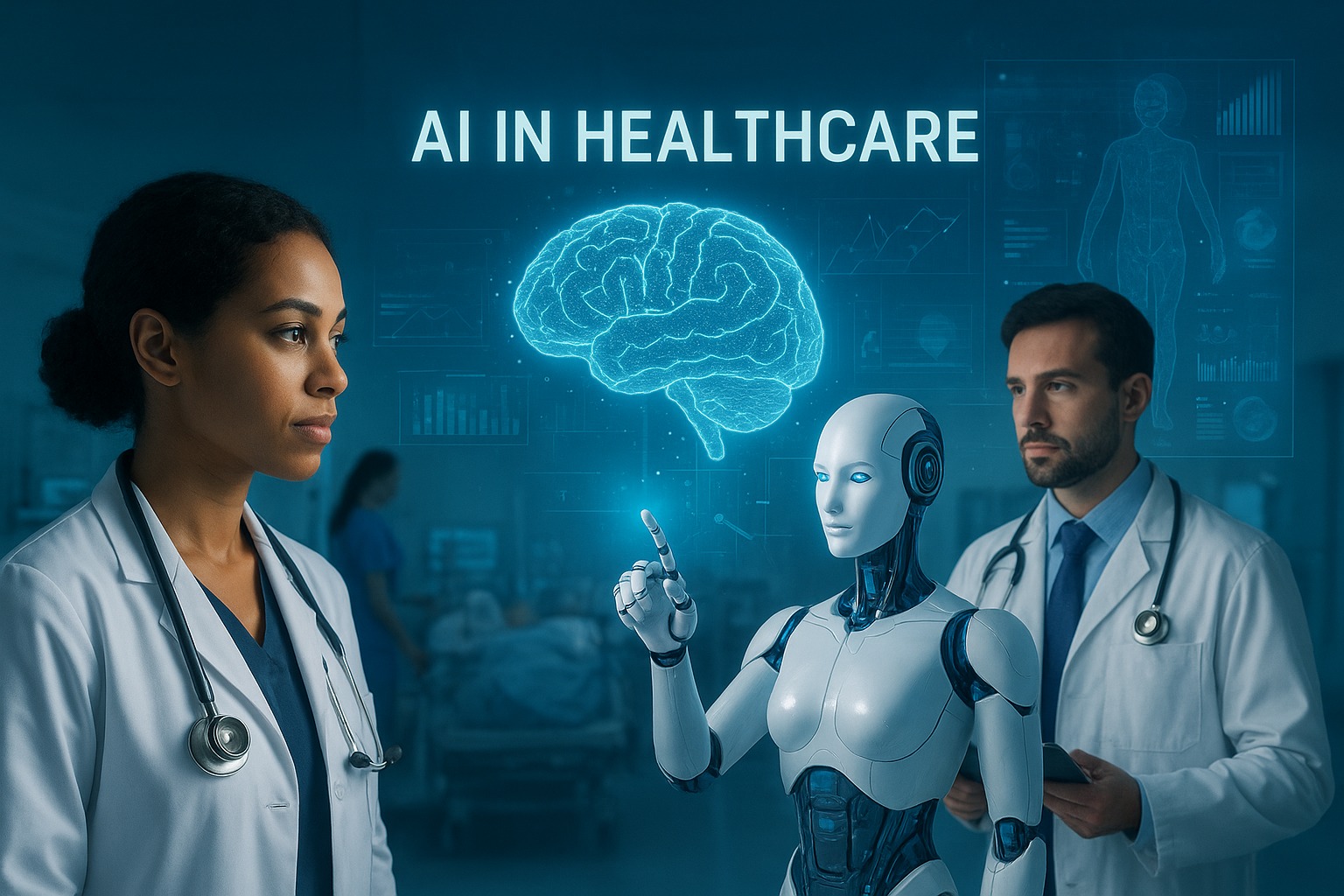
Artificial Intelligence (AI) is rapidly reshaping industries worldwide, and healthcare is among the sectors experiencing the most profound transformation. From diagnosing diseases earlier to personalizing treatment plans, AI is revolutionizing how patients, doctors, and health systems interact. What was once science fiction – machines helping save lives – is now a reality.
How AI is Used in Healthcare
1. Early Diagnosis and Detection: AI-powered tools can analyse medical images (X-rays, MRIs, CT scans) with remarkable accuracy. For example, algorithms are now detecting cancers, heart conditions, and eye diseases faster than traditional methods – sometimes even before symptoms appear.
2. Personalized Medicine: AI can study a patient’s genetic profile, lifestyle, and medical history to tailor treatment plans. This helps ensure therapies are more effective and reduces the risks of trial-and-error prescriptions.
3. Virtual Health Assistants: Chatbots and AI-driven apps guide patients with basic health advice, reminders for medications, and even mental health support – improving access to care without always needing a doctor’s visit.
4. Drug Discovery and Development: AI accelerates the process of discovering new medicines by analysing vast data sets of chemical compounds and predicting which ones might work. What once took years can now be achieved in months.
5. Predictive Analytics: Hospitals use AI to predict patient admissions, track disease outbreaks, and allocate resources more effectively. This means fewer delays and more efficient healthcare delivery.
6. Robotics and Surgery: AI-powered robotic systems assist surgeons in performing precise, minimally invasive procedures, reducing recovery times and improving patient outcomes.
Stay tuned to know more about the Benefits of AI in Healthcare in the next article.