
Newly Appointed Minister of Minerals: The Ministry Will Not Be Part of Politics
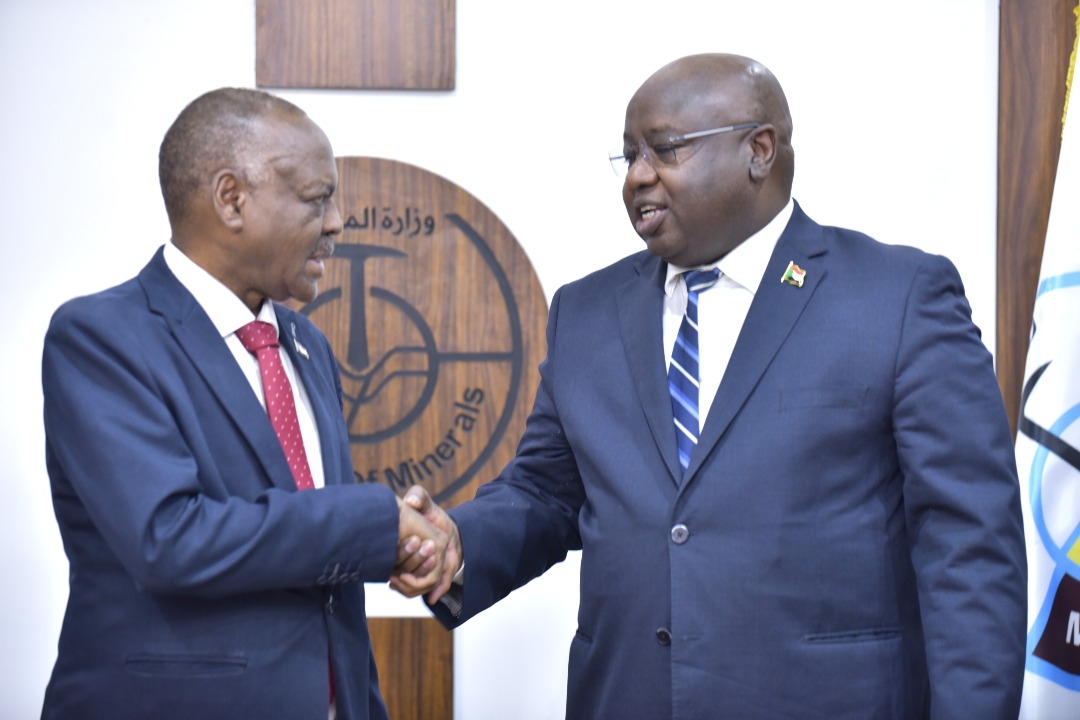
Minister of Minerals, Nour El-Daim Mohamed Ahmed Taha, said that “the Ministry of Minerals will not be part of political action.”
This came upon his official assumption of his duties as Minister of Minerals in Sudan, succeeding former Minister Mohamed Bashir Abu Namu.
The ceremony was held at the ministry’s headquarters in Port Sudan, in the presence of ministry leaders, regulatory bodies, and representatives of affiliated companies.
In his speech following the handover ceremony, Taha affirmed his commitment to transparency and professionalism, emphasizing that the Ministry of Minerals “will not be part of political action, but will remain a home for expertise and knowledge to support the national economy.” He added that the priorities for the next phase include diversifying mineral resources, enhancing scientific research, developing information infrastructure, and introducing modern technology and artificial intelligence into the mining sector.
Taha pledged to build strategic partnerships at the domestic and international levels and regulate artisanal mining activities “fairly and flexibly,” within a framework that achieves a balance between economic development and environmental protection.
For his part, former Minister Mohamed Bashir Abu Namu praised the cooperation he received from the Ministry’s staff during his tenure, stressing the importance of continuing to improve the work environment and address workers’ conditions. He expressed his pride in the achievements made in a vital sector facing complex economic and political challenges.
For her part, the Undersecretary of the Ministry, Dr. Hind Siddiq Adam Hamid, affirmed the Ministry’s continued implementation of strategies aimed at diversifying mineral resources, modernizing information systems, building capacity, and expanding the partnership base, while advancing digital transformation to enhance transparency and serve sustainable development in the mining sector.
The mining sector is one of Sudan’s most prominent economic resources, contributing significantly to the Gross Domestic Product (GDP). At the same time, it faces challenges related to regulation, the environment, smuggling, and limited technological investment.