
Sennar State Child Welfare Council : Challenges and Achievements
Eighty psychological support sessions included both girls and boys, with the support of UNICEF.
Report by:Haffiya Elyas
After the end of the war in Sennar State and the return of the city of Sinja to the bosom of the homeland, life gradually returned to the joints of the steadfast city, which faced the brutal aggression of gangs and rapid support that violated, killed, and terrorized the security personnel. Children were not spared from its power. With the return of life to the city, the General Secretariat of the Child Welfare Council in the state resumed its tasks of protecting children and promoting their rights to protection and care through various programs and activities, including coordination meetings and participatory consultative workshops, to ensure consistency with each other and with the relevant authorities. This includes linking child welfare efforts with civil society organizations, government institutions, and ministries.
The Child Welfare Council began its duties immediately after the declaration of a rebellion-free Singa in early November 2024. The first meeting of the protection working group was held in Sinja in December 2024, in the presence of a delegation from UNICEF led by Professor Hajar Osman Gamal El-Din, the protection officer at UNICEF, Blue Nile Sector and Sennar. Since that date, the return of programs and activities at the level of the General Secretariat of the Council has begun with the entry of some localities into the map of program implementation.
The Council held an important meeting within the framework of activating and responding to child protection mechanisms in April 2025 with the head of the judicial system. The aim was to introduce the judiciary to the situation of childhood in the state and to consider allocating the old building to the presidency of the judicial system to be dedicated to the children’s court. This followed a field visit by the representatives of the Council to this building, during which they communicated their concerns to the head of the judicial system. He promised that he would visit the building as soon as possible . This will culminate in the official opening and announcement of the establishment of a children’s court and the allocation of a judge for children.
The Council organized a meeting with the Protection Working Group regarding arrangements for returning to work, following up on activities and reports from partners, and identifying challenges, achievements, and interventions, with each entity focusing on its field of specialization and work.
The Council conducted government advocacy meetings on children’s issues with officials and directors of departments in administrative units at the local level, specifically in Al-Dandar locality and Al-Suki locality.
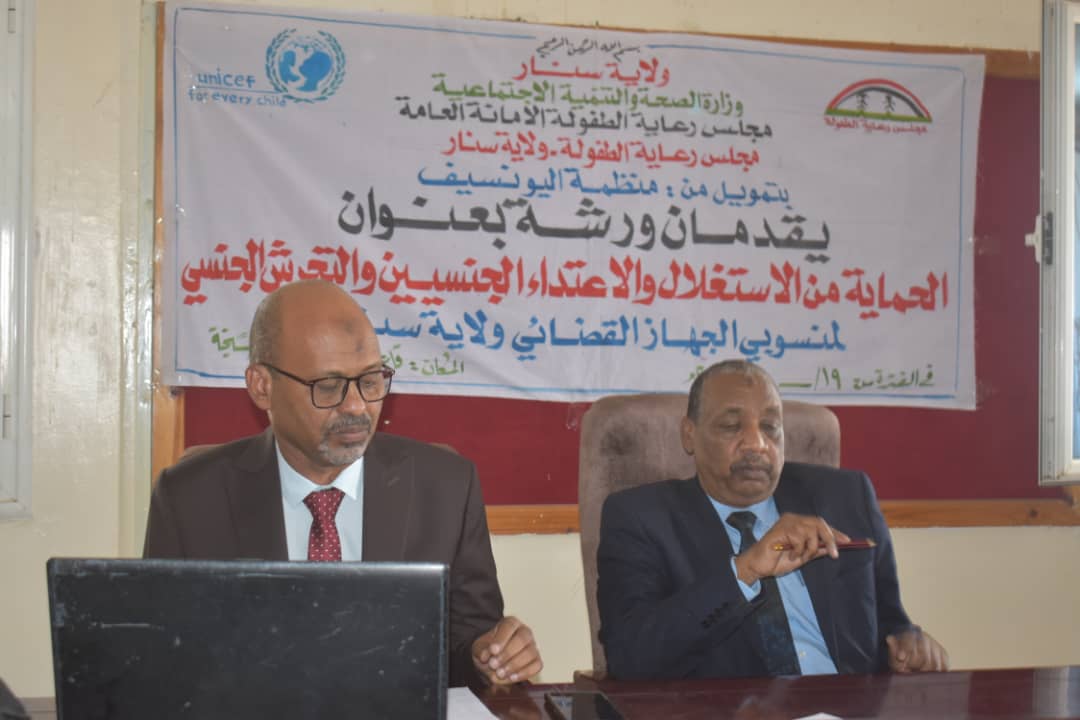
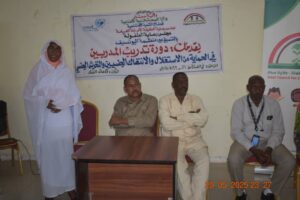
The Council organized a number of training workshops specialized in protection from sexual exploitation, abuse, and sexual harassment. A total of 106 government sector employees benefited from these workshops, including childhood partners from the health and social care sector, representatives from national and international organizations, judges, and workers in the judiciary.
The Council trained 25 young women to benefit from them in delivering protection messages through drama, empowering the role of youth in protecting children, advocating for girl child issues, and enhancing their role in rural communities.
With regard to psychological support activities and programs, the Council was implemented with funding from UNICEF at the level of the localities of the state (Singa, Abu Hajjar, Suki, Sennar, Dandar, East Sennar).
The Council, implemented at the level of the localities of Sinja, Abu Hajjar, Suki, Sennar, Dindar, and East Sennar, conducted about eighty psychological support sessions funded by UNICEF. These sessions included both girls and boys, with the number of boys benefiting from psychological support being 4,466 and the number of girls 4,557. Thus, the total number of beneficiaries from the sessions was 9,023. The psychological support activities included sports, cultural activities, drawing and coloring, dismantling and installation, folk games and heritage, health and awareness messages about personal hygiene, information about the dangers of cholera infection and how to prevent it, social messages about sexual harassment and awareness, and information about remnants of war and foreign bodies. Additionally, 26 researchers participated in these sessions, contributing to the psychological support and awareness-raising service.
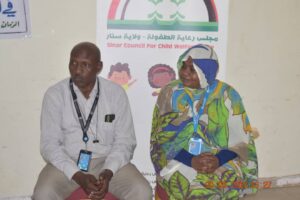
At the level of specialized workshops, the Council held a workshop entitled Building the capacity of members of child protection networks in transmitting protection messages through the theater, the workshop targeted 25 young women from the membership of protection networks at the level of 6 localities (Sinja – Abu Hajjar – Suki – Dandar – Sennar – East Sennar) for a period of 3 days from 13 to 15 May 2025, in the presence of the Minister of Health and Social Welfare, Dr. Ibrahim Al-Awad, And the Secretary of the Child Welfare Council, the workshop dealt with the topics of child protection by reviewing the legal references and rooting children’s rights in the Islamic religion with addressing the axis of law and rights with standing on the importance of awareness in changing societal behavior to kindly reach the root of the right of every child to protection, the facilitator Muhammad Al-Tayeb Al-Bashir, who is the head of the Drama Syndicate in the state of Sennar and the director of the Radio and Television Corporation in charge of addressing the backgrounds of the theater and the pillars of the dramatic work and screenwriting “The Story” The text was put in the formulation of awareness messages that cross communities in all the state, as the facilitator Taqwa Hamed, who is the director of the protection department in the Child Welfare Council, addressed the importance of correcting concepts and addressing protection issues from a unified perspective to achieve the purpose and make every child in the state of Sennar safe and protected from all violations in all its forms and the importance of training and increasing the knowledge of people active in child protection in all localities of the state.
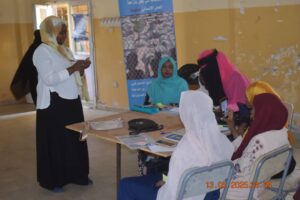
The Council, represented by Ismail Kamel and a number of Council staff, also participated in the awareness campaigns implemented by Save the Children in schools located within a comprehensive quality education project for the purpose of changing behavior through community mobilization activities, encouraging members of local communities towards positive behavior, stopping practices harmful to children’s health that may be life-threatening or depriving them of education, including child marriage, child labor, female genital mutilation and mutilation, gender-based violence and health impacts. And the negative psychological consequent and the need to concert efforts to eliminate all threats to children and to ensure the educational process Participated in these campaigns Participated in these campaigns expert Dr. Imad Mamoun specialist community medicine and preacher Sheikh Abdul Wahab Babiker and mental health specialist Dr. Amal Hassan Al-Nour lecturer Faculty of Education University of Sennar and Commissioner of Humanitarian Aid Musa Mohammed Ahmed and coordinator of programs in the Child Welfare Council Ismail Kamel Mahmoud and police assistant Abbas Mohammed Abkar Mohammed Family and Child Protection Unit Local Sennar, where the attendance reached 450 individuals, the number of men is 50, the number of women is 250, the number of male children is 70, and the number of female children is 80, in the village of Karima Abdul Rasoul, a locality east of Sennar
The Council also continued its tireless work in the file of reunification, where 6 children were handed over to their families during the past months in partnership and coordination with governmental and non-governmental agencies from international and national organizations active in the protection of children, the ages of children ranged from 12 years to 3 years. How to protect children and how to deal with children in emergency situations.
The Council also continued its tireless work in the field of reunification, where six children were handed over to their families during the past months in partnership and coordination with governmental and non-governmental agencies from international and national organizations active in the protection of children. The ages of the children ranged from 3 to 12 years. This raises important questions about how to protect children and how to deal with them in emergency situations.