
Washington: US Entry Ban List Not Yet Ready
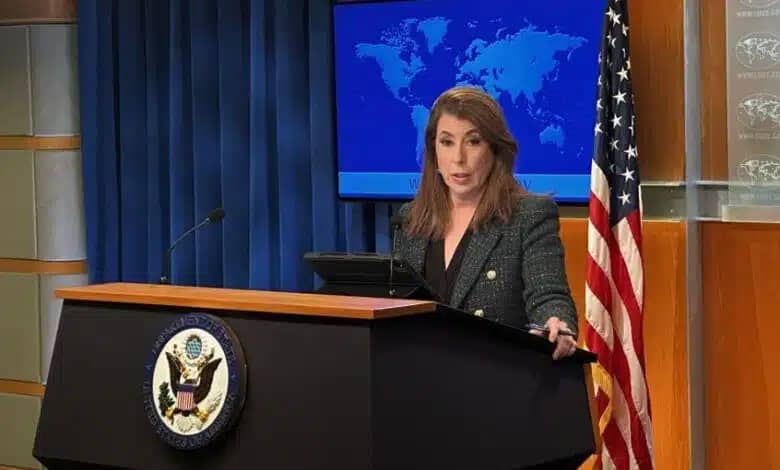
State Department spokeswoman Tammy Bruce said, “There is no list of countries whose citizens are restricted or barred from entering the United States.”
A White House official told Fox News Digital that no decisions have been made regarding a potential travel ban on more than 40 countries, including Russia and Belarus.
Reports indicate that citizens of Afghanistan, Iran, Cuba, Bhutan, Libya, North Korea, Somalia, Syria, Sudan, Venezuela, and Yemen would not be allowed to enter the United States under this proposal.
These 11 countries would be classified as “red” on the color-coded system.
According to reports from Reuters and The New York Times, these countries could face severe or total travel restrictions imposed by the United States.
During a briefing at the State Department on Monday, Bruce explained that there is no specific list, but that a review is underway.
“First of all, there is no list. What people have been looking at over the past few days is not a list that is here and being worked on. There is a review, as we know from the president’s executive order, to look at what can help make America safer when it comes to visas and who is allowed into the country. But what is being promoted as something coming from the State Department is simply not true,” she said.
Other countries, such as Russia and Pakistan, will still be allowed to travel, unlike the total ban, but will face obstacles when it comes to obtaining a visa. This level is considered “orange.”
Various countries, including several African countries, are also reportedly being monitored for potential restrictions under the “yellow” level and will have approximately two months to make changes to avoid being placed in the “orange” or “red” level.
The yellow level includes Caribbean countries, including Saint Lucia and Saint Kitts and Nevis, as well as Antigua and Barbuda.
According to Reuters, 41 countries will be affected in some way by this measure, while the New York Times reports that the number reaches 43.
Earlier in the first Trump administration, an executive order banning travel from Iran, Somalia, Sudan, Syria, Yemen, Iraq, and Libya faced legal obstacles and was described by opponents as a “Muslim ban” due to the demographics of those countries. Supporters at the time argued that it was necessary to ensure strict tracking of those entering the country.