
Abu Bakr Khalid Pioneer of Social Realism in Sudanese Literature

By: Gamal Ghallap
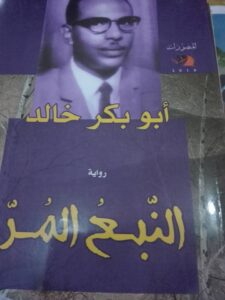
Abu Bakr Khalid, a pioneering novelist and short story writer, was born in 1935 in Elafon, situated on the east bank of the Blue Nile, south to Khartoum. He left Sudan to Cairo to study at Al-Azhar in the 1950s. The vividness and richness of the intellectual and cultural scene of the Egyptian capital during the 1950s and the 1960s motivated Khalid to forge his way towards experimenting his writing skills in order to explore the most discussed intellectual and cultural topics at that time. While he was studying at Al-Azhar, he published some articles in Al-Masa’a newspaper, a prestigious cultural outlet in Cairo of fiftieth and sixtieth. Khalid’s articles manifested a talent of young writer knowledgeable, well informed about the literary currents and ideological doctrines dominated Egypt and the Arab world, part of which derived from Europe, such as socialism or formed within Arab countries, such as the Arab nationalist movement. A majority of scholars, writers, literary critics, essayists and poets involved in debates highlighting, backing or criticizing the harness of the newly-dominant notions and attitudes. For example, some believed in socialism as an effective approach that can be used not only to interpret reality but also to revolutionize local contexts. In the middle of such ideological reflections, Khaled published three novels including “The Beginning of Spring” 1958, “The Bitter Spring” 1966 and “Jumping over the Low Wall”, 1976. He also released a short story collection dubed “Village Dogs” in addition to a collection written in collaboration with Tayeb Zarrouk titled “Sudanese Stories”.
The renowned Sudanese critic Mukhtar Ajouba in a chapter devoted to study Abubakr Khalid’s stories in his book “The Short Story in Sudan”, outlines the most visible features of the writer’s work, “At his beginning as a writer, Abu Bakr Khalid tried to introduce characters of Sudan or a specific environment of Sudan importantly related to particular social situations where the writer depicts his experiences conveyed to reader via narrator always depicts the society narrated from a tourist’s overview. This strategy may qualify the writer/narrator to represent a wide scope of the Sudanese society, while providing opportunity to communicate the psychological suffering of the narrator as a reaction to the great changes and disparities he witnesses.
According to the Egyptian critic Sayed Hamid Al-Nassaj, Abu Bakr Khaled sought to brand his novels as a mirror of Sudanese society during the colonial era and the early independence era, as he tailored the political conflicts in his texts besides addressing the social issues that widely addressed by different Sudanese scholars and writers during that period of history.
Al-Nassaj believes that Abu Bakr Khalid’s work is heavily influenced by Naguib Mahfouz, but it did not acquire the accuracy and durability of the novel’s architecture that characterized the novels of Naguib Mahfouz. The critic attributes the lack of structural consistency to the writer’s preoccupation with depicting Sudanese society and the lives of the people rather than paying enough attention to the technical structure of the novel, pointing out that, “Perhaps this preoccupation interprets why Abu Bakr Khaled is much interested in depicting political aspects such as ideological conflict among parties, revolutionary events, the role of students in society, education issues, the phenomenon of exploitation, greed, the control of rich groups and all manifestations of negative traditions that pull society backwards such as zar, sorcery, quackery and others. It seems that the novelist aims behind this to push people to revolt against these manifestations, as he is keen to portray the lives of ordinary people, their customs, daily issues, thoughts and obsessions”. Al-Nassaj notes that the novelist sought to paint an accurate picture of his country and its people, “he devotes pages to describe of houses, streets and social relations between neighboring people. Through such detailed description, the Arab reader in any Arab country feels that he has learned many things about his brothers in Sudan and that they hardly differ from the people of his own country, as they suffer the same issues, conflicts, crises, and above all, they struggle to continue swimming against the same rough waves.
The previous quotations emphasize the writer’s commitment to contribute to the development of his society using his pen as an effective tool so it is natural that such self-commitment leads to a kind of artistic weaknesses that the writer can only overcome by continuing to write and exploring the means that enable him to combine the two concerns, Abu Bakr Khaled has endeavored as much as possible to reshape people’s lives in literary forms that have not been re-read seriously yet except for few comments here and there.
In confirmation of the prevailing realism in the writings of Abu Bakr Khaled, we quote the following paragraph from an article titled “reflections on the novel Bitter Spring published in the daily newspaper Al-Siyasah on August 2, 1986 by Nabil Ghali, Ghali, quoted, “The late storyteller Abu is one of the first pioneers who laid the foundations of the story art as an expression of the exposure of the life lived inside the boundaries of the triple of poverty, ignorance and disease. His vision was characterized by realism polarized by political attitudes, and his stories were characterized by the profound depiction of a context where characters are involved seriously in exploring not only their personal identity but also the concept of identity in general.
The fifties and sixties of the twentieth century witnessed a global political, social and cultural movement that led to changing situations in many countries of the world. It was the era of national liberation in the southern part of the globe, which the West used to call the Third World. Writers, poets and intellectuals in general were concerned with contributing to the process of liberating their homelands first and then contributing at a later stage to the process of rebuilding homelands, and they believed deeply in the need to spread awareness of the issues facing/threatening national construction headed by eliminating remnants of colonialism. The storytellers and poets were interested in sensitizing their readers to the dangers facing their existence. In general, several literary practitioners preferred to deal with the literary work as a channel through which the calls for development, liberation and revolution can be raised against what restrains the human being however, such attitudes led literature to fall into pitfalls of rhetoric and directness in order to enhance communication with the audience.
When we look at Abubakr Khalid’s work today, it is crucial not to isolate it from its historic context in which it was produced. From this angle, Abubakr Khalid’s novels and stories can represent a fertile source for scholars who are looking into the ties that bind literature to the movement of society, as his works carried the tinge that makes a literary work a social document and forms a narrative entity that enables the scholar to identify some features of the serious and mature beginnings of the Sudanese story and novel.