
The Face of Truth: Taqadum’s Plan to Impose International Guardianship Over Sudan
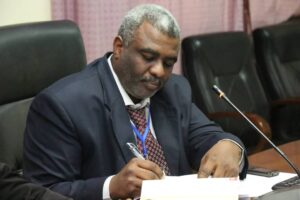
By Ibrahim Shglawi
It is clear that the Civil Forces Coordination “Taqadum” represents a trend that seeks to undermine the country’s sovereignty by bringing in international forces at the expense of national strategic issues, disregarding the historical Sudanese political experience, which has always distanced itself from any colonial projects for governing or placing the country under guardianship. Taqadum’s intentions became evident since Abdullah Hamdok summoned the United Nations mission led by Volker Perthes in January 2021, causing their policies during their rule to reflect foreign agendas that posed a threat to the country.
Their political stances have consistently aligned with foreign agendas since they entered Sudan’s political arena after the fall of the Al-Bashir regime. They even brought the country into war through a failed coup scenario that expressed their developed options against those who were obstructing the framework agreement, which is also one of the colonial manifestations, along with the Lawyers’ Draft Constitution they aimed to use to govern the country without electoral mandate—in the worst political experience in Sudan’s modern history.
After their coup plan failed, they moved to support the RSF rebellion directly, signing an agreement with them last February in Addis Ababa that made them its political arm. At that time, they believed the RSF was close to winning the war in its favor. But divine fate steered things otherwise, as the Sudanese people united and rallied around their national armed forces to protect the country from the colonial scheme, leading to the collapse of the first plan. Consequently, Taqadum began searching for a second plan under the pretext of civilian protection. However, this plan also collapsed last week, following the end of the UN Security Council session and the withdrawal by the United States, the United Kingdom, France, and some regional allies of the draft resolution under Chapter VII, which stipulated the deployment of international forces to Sudan.
This came just before the session began, after both Russia and China threatened to use their veto power. As a result, it was announced that the draft resolution would be postponed until October 2025, which observers considered sufficient time for the situation in Sudan to change and possibly to end the war and restore security and peace, considering the extensive operations in combat zones and the siege imposed on the rebellion, which has started yielding results.
Nonetheless, in a strange step that observers viewed as a new moral and political downfall for Taqadum, two days ago the Sudanese Congress Party’s Deputy Chair and member of the Coordination Secretariat, Khalid Omar Youssef, announced on Al Jazeera Mubasher the demands put forth by the Coordination leader Abdullah Hamdok to British government officials and the House of Lords. These demands centered on the importance of deploying international forces to protect civilians. Youssef explained during his talk that they had met with officials in the UK, which holds the Sudan portfolio at the UN Security Council and will chair the Council’s current session, to discuss Sudan’s issues. Among the demands presented by Hamdok and Youssef was the request to establish safe zones in Sudan, which would protect civilians and be free of weapons and military manifestations.
They also called for a weapons and flight ban in the country—a position that raises many questions and astonishment regarding national sovereignty. These demands represent a call for international intervention in Sudan, serving as the third plan to impose the international will on the Sudanese people rather than to protect them, as they claim. It is evident that Taqadum wants to implement the agenda of its supporters at any cost, even if it means compromising Sudanese sovereignty under the pretext of preventing the military from governing.
This stance reflects the ongoing political conflict and reveals that Taqadum Coordination is striving to achieve its political goals at the expense of the Sudanese people by exploiting international forums with the support of their regional allies who have supported igniting this war. Therefore, officials in the Sudanese government should consider the risks and challenges that may arise from pushing this issue back into the Security Council. The insistence on international intervention that Taqadum cloaks as being for the sake of civilians is nothing more than a new scenario in their ongoing schemes to secure a foothold in the political process in the aftermath of the war. The Sudanese people have sent a message that they are expected to apologize for the war and then go to fair trials to answer for the charges.
Thus, I believe it is essential to find local solutions to the internal crises related to political dialogue among national political parties without relying on international support that could expose the country to further division and conflicts. I also affirm, in light of the truth, that the manifestations of political conflict in our country reveal shameful aspects of exploiting available tools for scoring points at the expense of the nation and the people. We call for the necessity of national consensus for the recovery of the political process. As long as this situation persists, Taqadum will not cease its support for the RSF rebellion and will continue to seek foreign intervention. Meanwhile, Sudanese national parties will persist in their efforts to remove it from the future of the political process. Between these two positions, activists continue to stoke the flames of discord, disregarding the importance of restoring security and achieving national unity.
May you remain in good health.
Monday, November 4, 2024
Shglawi55@gmail.com