
Egypt and Sudan dismiss new River Nile agreement
Agencies
Egypt and Sudan have rejected the recently ratified agreement on The Nile River Basin Cooperative Framework (CFA) which was expected to come into force today, 13th October 2024. The Agreement aimed to among many initiatives, establish the Nile River Basin Commission to succeed all the rights, obligations, and assets of the Nile Basin Initiative (NBI).
Six riparian countries of the Nile River Basin had ratified the Agreement at a Bujumbura meeting earlier this year. The NBI member countries are Burundi, the DRC, Egypt, Ethiopia, Kenya, Rwanda, South Sudan, Sudan, Tanzania and Uganda, participates as an observer of the NBI.
The first sign that all was not well among NBI members came Thursday this week when the 2nd Summit of the Nile River Basin Heads of State and Government, which was due at Munyonyo in Kampala, was called off. The second summit was set to be held this week (17 October 2024) to celebrate what would have been an important milestone in the history of Nile cooperation, and to flag off the transition from Nile Basin Initiative to the Nile River Basin Commission.
Egypt and Sudan issued a statement Saturday, hours to the start of the agreement, urging all Nile Basin states “to restore the integrity of the 1999 Nile Basin Initiative and refrain from unilateral actions that could exacerbate divisions between upstream and downstream countries”.
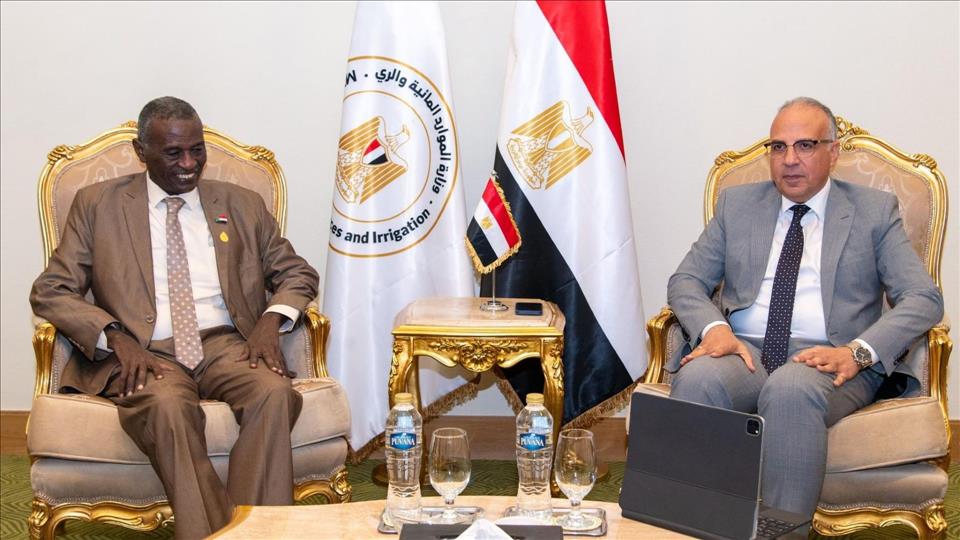
This call came in a statement issued by the Egyptian-Sudanese Permanent Joint Technical Commission for Nile Waters (PJTC) following a crucial two-day meeting on October 11-12 in Cairo. The meeting discussed key water-related issues and concerns within the Nile Basin including recent developments related to the recent ratification of the Cooperative Framework Agreement (CFA) by some Nile Basin states.
“The Commission reaffirmed that the six-state commission established under the incomplete CFA draft cannot, under any circumstances, be regarded as representative of the Nile Basin as a whole,” Ahram reported.
During the meeting, Egypt’s Ahram reports, PJTC emphasized that Egypt and Sudan have made concerted efforts over the years to restore cohesion and bridge divisions caused by the adoption of the non-consensual CFA draft by several upstream states.
Egypt and Sudan have long argued that the CFA violated the 1929 and 1959 Nile River agreements.
Egypt has also rejected the CFA citing the International Court of Justice (ICJ) ruling of 1989 which stipulated that water agreements enjoy the same immutability as border agreements: they cannot be revoked or amended without the assent of all parties concerned.
According to the PJTC, the 2010 CFA draft lacks the necessary consensus and fails to adhere to established international law principles and best practices, which promote sustainable development and cooperation.
The PJTC pointed to African transboundary water models, such as the Zambezi and Senegal River basins, as examples of effective collaboration.
“Egypt and Sudan have consistently advocated for a collaborative, all-inclusive mechanism among Nile Basin states, stressing the importance of prior notification, consultations, and scientific assessments of the impacts of water projects, however, their calls for constructive engagement have not been met with positive responses,” the statement read.
Both countries reiterated their commitment to cooperating with all Nile Basin nations, in line with internationally recognized principles that safeguard the interests of all parties while preventing harm to any riparian state, the statement added.
Egypt and Sudan reaffirmed that the 2010 CFA, initially signed by four upstream states, is not binding on them, stressing it contravenes customary and conventional international law.
Egypt and Sudan emphasized in the statement that the six-state commission established under the incomplete CFA draft cannot represent the entire Nile Basin.
They expressed their belief that restoring inclusivity within the initiative is the best path toward achieving a comprehensive and permanent framework for Nile Basin cooperation.
The Nile, which has dual origins in the Nile Equatorial Lake’s region and the Ethiopian Highlands, is one of the major rivers on the African continent. The river has a drainage area of 3.18 million km2, which is about 10% of the land area of continental Africa. The basin traverses the boundaries of 11 countries, namely Burundi, Democratic Republic of the Congo, Egypt, Eritrea, Ethiopia, Kenya, Rwanda, South Sudan, The Sudan, Tanzania and Uganda. The population of the 11 riparian countries is about 42% of the population of Africa.
Status of the CFA
Despite President Museveni’s best efforts to reconcile members, including sending Special Presidential Advisor and CDF of UPDF Gen Muhoozi Kainerugaba to Cairo, Egypt insist they have full control on matters related to the waters of the Nile.
Museveni has previously warned the Egyptian government against uttering ‘chauvinistic statements’ in regard to the use of the River Nile waters, which escalated after the building of the multi-billion dollar 6000 MW dam—the Great Ethiopian Renaissance Dam.
Museveni argued that, “The Egyptians think that the threat of the Nile is building dams on it…The biggest threat of the Nile is the continued underdevelopment of countries in the tropics. No African wants to hurt Egypt, however, Egypt cannot continue to hurt Black Africa.”
Ugandan President Museveni said then that the loss of forest cover for wood fuel by populations of the upper stream riparian countries was a result of not utilizing the Nile to build hydro-power dams to provide cheap electricity.
Museveni called on Egypt to shift its focus toward increasing the quantity of water in the Nile rather than strictly adhering to the Nile Waters Agreements, which have restricted equitable use of the river across the basin.