
With Hamid Fadallah In an Image of Fighter
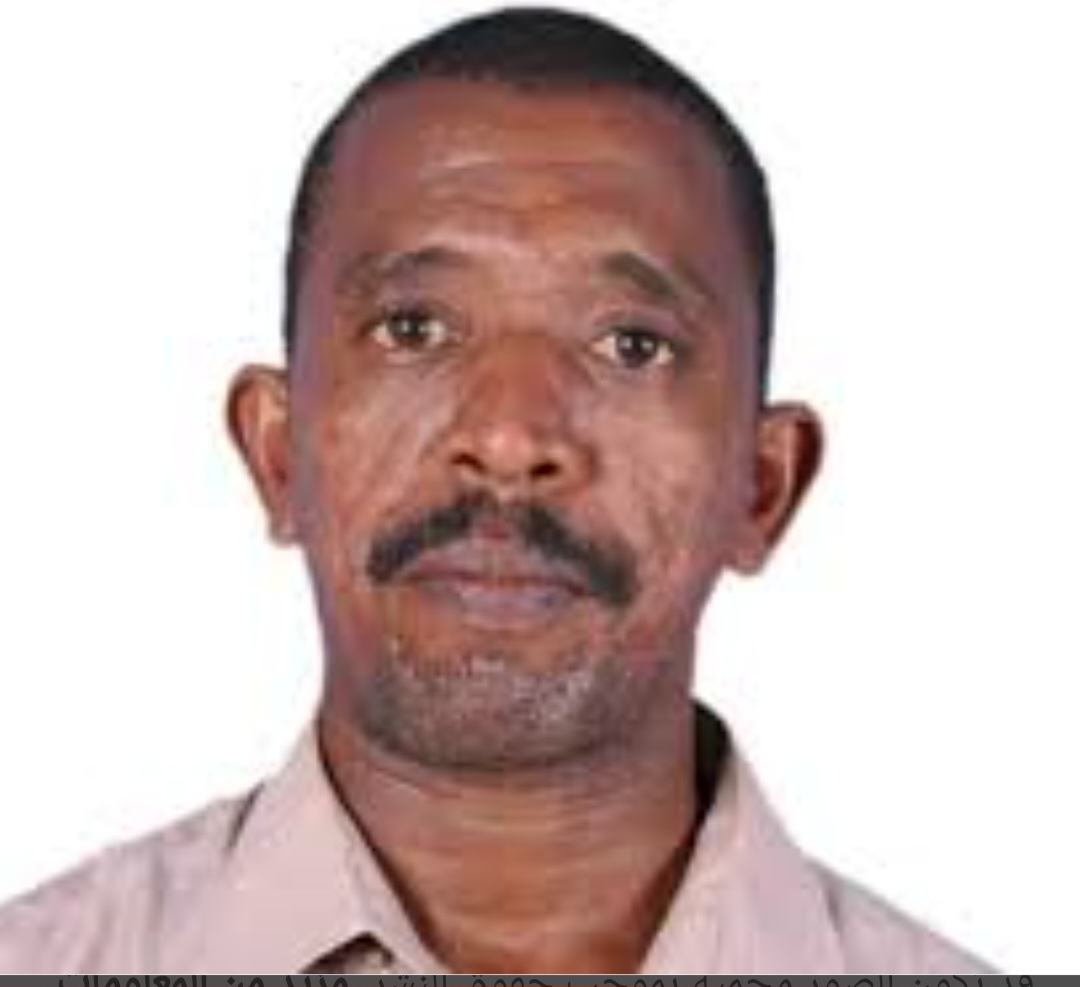
Abdulaziz Ali Omer
A year ago a symposium was held, an image of John Taban had adorned the hall of press visually and in print as the press presented him to German Public Opinion as a hero who led an operation to liberate a group of German Journalists who had fallen as captives during the coverage of civil war in South Sudan. The concern of the press with this incident amounted to the extent that a widely spread weekly magazine published a sensational press investigation, and the talk also revolved around an arrangement of meetings between that hero and the president of the Republic.
On that evening, I arrived at the small, quiet, and lovely city of Hermannsburg in
the lower state of Saxony, intending to attend a symposium at an invitation of Sudan Forum and the German Evangelical Church to take part in a seminar about chronic issues of Sudan. The participants from abroad were chosen carefully, and the symposium organized for two institutions is a commendable tradition that has continued regularly for over twenty years.
After breakfast, I left the crowded food room with participants. I sat on one of the strewn benches in the middle of a big garden in the center of the Academy Buildings. The air was pure, the breeze calm and wet, and the sun’s heat hadn’t yet intensified since mid-July.
Most attendees were Sudanese living in diaspora from Germany, France, Britain, Holland, America, Sudan, and other European nationalities interested in Sudan’s affairs. Some of them worked in our country as experts and technicians.
The meetings were always intimate. There were familiar faces who attended annually and regularly. We found new faces, especially those who came from the inside. We shook hands warmly, exchanged laughter and comments, and acquired new friendships.
We entered one after another to the wide lecture hall filled to the last seat. The president of the morning session inaugurated it with the welcome, announcing that the first speaker was Mr. John Taban, who would attend minutes later as he was still having breakfast in his room. He would brief them on the most recent developments in the front of operations.
The adjoining door opened, and Mr. John, tall and wearing a grey shirt and an elegant black suit, entered. From his neck dangled a golden cross. From his dark glowing skin wafted a permeating aftershave with a good scent.
Taban immediately headed to the podium and kissed the session’s female leader before straightening himself on the chair.
I turned towards my German friend Halmoot, who was sitting beside me.
“I have a snatching perception of warriors in the equatorial jungle.”
He said, “He looks like a movie star.”
I told him, whispering with a sarcastic smile, “He is one of the postmodern heroes of war.”
Halmoot couldn’t restrain his laughter,. He gufffawed with laugjter and one of the people sitting around put his forefinger on his lips as a warning gesture.
Taban didn’t initiate with the key subject of the symposium but promptly talked about the story of the journalists and the freed hostages, which was a well-known story leaving the mass media with nothing to be said for anyone who wanted to elaborate on it.
He spoke at length about the operation, describing what they encountered: the suffering and the release of prisoners. They had to walk at night to avert the fires of enemies and friendly fires. He told of the fall of huge trees, torrential rains, and the dense high grass hindering their track, obscuring the visibility. After three days of marching, they reached the safe borders of Uganda.
John spoke as if he were standing on stage coloring his voice between the highness and lowness. The words could hardly come out of his mouth, as if he were on the verge of weeping, and they stopped before tears wet his face.
The wide hall echoed with sharp and continuous applause, and some stood in an ovation.
The leader of the session exerted great effort to restore calm and silence to the hall before one of the participants stood from the further corner of the auditorium saying, “Mr. Johan Taban, don’t you know me?”
John looked at him, replying, “Sorry, I have never had the honour of knowing you before.”
“Try to remember. It hasn’t been a long while,” he said.
John didn’t contemplate the face of the speaker and, with resentment, answered, “Excuse me when I reiterate my sorrow again.”
“My name is Thomas Shilender, one of the journalists who were liberated. We never witnessed you in our march. The first time we got acquainted, was in the grand lobby of Sheraton Hotel in Kampala, the Capital of Uganda, before we had been transported to Berlin.”
*”** Hamid Fadallah is a retired Sudanese expatriate doctor who has lived in Gernan since 1957. He graduated from the College of Medicine in Martin Luther University and Free Berlin which is another Higher Learning Institution .He”s a short-Story Writer and a translator from German to Arabic . He”s one of the Founding Members of several Civil Soceity organizations that support human rights, Free Thought and Dialogues of Civilizations. He”s also a member of a Centre for the Treatment of Torture Victims His published works include :” Diary of a Physcian in Berlin” ,” Berlin Conversations about the Issues of Islam and Europe” ,” Sudan: A unity in Diversity” and ” An Ebony Forest”, a collection of poems by Salah Ibrahin. He spent most of his life in German except 5 years in which he worked in Omdurman and Juba teaching hospitals in North and South Sudan respectively. His writings are mainly centred around an immigration and Integratiion into the German Community.