
Agar calls for classifying the RSF militia as a terrorist organization
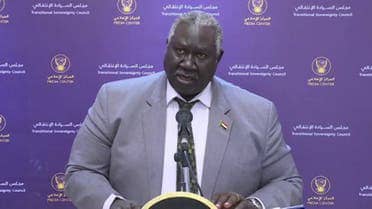
Deputy Head of the Transitional Sovereignty Council, Lieutenant General, Malik Aqar Ayre, said that the rebel Rapid Support militia’s actions have exceeded the level of violence, so it must be classified as a terrorist organization that threatens international peace and security and must be fought in order to preserve the unity of Sudan and return the country to the square of stability and security.
This came during his address this morning in the hall of the Coral Hotel in Port Sudan, opening the training workshop on rules and guidelines for human rights in the context of countring terrorism, which was organized by the Technical Committee for the Implementation of UN Security Council Resolutions (1267/1373) and subsequent resolutions of the National Counter-Terrorism Authority, in the presence of the Ministers of Justice, Defense, Interior, Social Welfare، Director of the General Intelligence Service, representatives of diplomatic missions, international and regional foreign organizations, and those interested in human rights issues in Sudan.
Agar asserted that the Sudan war is a war between the Rapid Support Militia and the Sudanese people, in which the militia used all terrorist practices.
The Deputy Head of the Sovereignty Council warned the countries and groups that support the Rapid Support Militia that Sudan’s instability leads to instability in the Horn of Africa and the spread of illegal immigration and extremism, pointing out that Sudan has a strong legacy that enables it to address its problems on its own if the interference of external agendas stops, indicating that whoever wants good for Sudan must contribute to its stability and not to destabilize its security.
His Excellency added that the issue of terrorism has become a concern for major and developing countries alike, indicating that human rights issues are sensitive issues that require cooperation between all countries, stressing that Sudan supports all means that promote human rights, especially since the workshop seeks to strengthen the capabilities of the security services and organizations working in light of what Sudan is facing among many challenges, including combating violence, extremism, and hate speech.
Agar stressed that the approach of intimidation and threats of violence must be confronted because it disturbs the internal and external balance and the necessity of reducing the motives of religious and mental extremism and the conflict over resources, which are among the causes of violence.